
Divestment has emerged as a priority for the government following a moderation in direct tax collections.

Adani group companies reported a record capital expenditure of Rs 1.53 lakh crore (USD 16.1 billion) and an all-time high EBITDA of Rs 94,834 crore (USD 10 billion) in the 2025-26 fiscal year, signalling an accelerating infrastructure expansion cycle while maintaining leverage below its stated target.

The Indian central government has reduced its total expenditure by approximately 60,000 crore in FY26, below its revised estimate, to successfully achieve the fiscal deficit target of 4.4 per cent of gross domestic product (GDP), according to the latest data from the Controller General of Accounts (CGA).

Commercial vehicles major Tata Motors Ltd has announced a record 144 patent applications filed in FY26, its highest in a single year, focusing on vehicle safety, reliability, cost, comfort, and future mobility solutions like electric and hydrogen vehicles.

Unified Payments Interface (UPI) has reached a record Rs 314 lakh crore in transaction value in FY26, representing more than a 4,000-fold increase since inception.

India achieved a current account surplus of USD 7.1 billion, or 0.7 per cent of GDP, in the January-March quarter of 2025-26, primarily boosted by robust services exports and increased remittances from overseas Indians, according to recent Reserve Bank of India data.

India's auto retail sector achieved record-breaking sales of 2,96,71,064 units in FY26, a 13.3% increase, primarily driven by the implementation of GST 2.0 which reduced the tax burden on mass-segment vehicles, according to the Federation of Automobile Dealers Associations (FADA).

FMCG major Nestle India reported a significant 27.18 per cent increase in consolidated net profit for the March quarter of FY26, reaching Rs 1,110.9 crore, driven by record domestic sales and a substantial boost in advertising investments, leading to a more than 7 per cent surge in its share price.

India's electric passenger vehicle market saw an 87.4 per cent year-on-year increase in FY26, reaching 233,246 units, primarily driven by the mid-size SUV segment (20-30 lakh price bracket), while the entry-level segment (sub-10 lakh) experienced a decline.

The Indian government has marginally exceeded its indirect tax collection target for fiscal year 2025-26, with strong performances in customs, excise, and GST revenues.

Godrej Properties Limited (GPL) reported its highest-ever quarterly profit of 649.5 crore in Q4 FY26, a 70.13 per cent year-on-year increase, driven by record revenues and bookings. The company aims for over 39,000 crore in residential bookings for FY27 and plans to raise up to 3,000 crore through debt securities.

Finance Minister Nirmala Sitharaman has urged income tax authorities to significantly accelerate the adjudication of taxpayer appeals.

Eternal, the parent company of Zomato and Blinkit, reported a nearly fourfold increase in net profit to 92 crore for Q1FY27, primarily due to operational gains and the strong performance of its quick commerce business, Blinkit.

Fast-moving consumer goods (FMCG) companies like Dabur India and Marico anticipate high single-digit growth in Q4FY26, driven by strong domestic demand in India, which is helping to offset the negative impact of geopolitical conflicts in West Asia on their international businesses.

India's exports of printed circuit boards (PCBs) to China dramatically increased over 40-fold to $1.5 billion in FY26, indicating a significant shift where China is increasingly importing simpler electronic assemblies from India as it focuses on higher-value manufacturing domestically.

Paytm's parent company, One 97 Communications Ltd, has seen its domestic ownership increase to 51.6% in Q1 FY27, solidifying its status as an Indian-Owned and Controlled Company. This rise is driven by increased investments from mutual funds and insurance companies, reflecting growing investor confidence following Paytm's first full-year profit in FY26 and improved operating performance.
Paytm's parent company, One 97 Communications Ltd, has seen its domestic ownership increase to 51.6% in Q1 FY27, solidifying its status as an Indian-Owned and Controlled Company. This rise is driven by increased investments from mutual funds and insurance companies, reflecting growing investor confidence following Paytm's first full-year profit in FY26 and improved operating performance.

FSN E-Commerce Ventures (Nykaa) reported nearly 30 per cent year-on-year revenue growth in Q1FY27, marking its highest revenue growth in 13 quarters, primarily driven by accelerated expansion in its fashion segment.
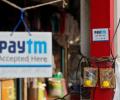
One 97 Communications Ltd, operating Paytm, is set to issue its first bonus shares, following a landmark year of achieving its maiden full-year profit and gaining significant market share. The board will meet on July 20 to decide on the bonus issue, reflecting confidence in its financial strength and aiming to improve stock accessibility for retail investors.

Amul, India's leading dairy brand, has achieved a historic turnover of Rs 1 trillion in FY26, marking an 11 per cent growth. This milestone is attributed to aggressive domestic distribution, product diversification, and strategic international expansion into markets like Europe, the US, Africa, and Southeast Asia.

Retail major Trent is embarking on a robust expansion plan, aiming for significant growth through new store additions for Westside and Zudio, diversification into new formats like Samoh and Burnt Toast, and a projected recovery in like-for-like (LFL) growth.

'The share of the private sector is at its all-time high of around Rs 42,000 crore in FY26, reflecting its expanding role in the defence ecosystem.'
Godrej Properties closed FY26 with record bookings and presales, exceeding its annual guidance, but brokerages express concerns over weak cash-flow generation and the ability to sustain growth amidst a muted real estate market.

Adani Group Chairman Gautam Adani announced a capital expenditure programme of over 2 trillion for Adani Power, aiming for 45 gigawatts (Gw) capacity in five years, including a significant entry into nuclear power with a target of 10 Gw by 2035 through Adani Atomic Energy.

The government introduced the SHANTI Act, 2025, to support the mission and open the sector to private participation.

Nissan Motor India aims to achieve a fourfold increase in domestic sales, targeting 100,000 units annually, and export another 100,000 vehicles from its Chennai plant by financial year 2027-28 (FY28), marking a significant revival of its presence in the Indian passenger vehicle market.

Companies are investing heavily in complex injectables, respiratory therapies and biosimilars to improve margins and diversify portfolios.

Reliance Industries Ltd (RIL) is preparing for its next phase of growth by establishing advanced manufacturing and export platforms to strengthen its consumer products ecosystem and expand its global footprint, Chairman and MD Mukesh Ambani announced.

L&T Finance reported a robust Q1FY27 with net profit growing 29% year-on-year to 900 crore, driven by strong asset growth and strategic initiatives including accelerating cross-selling, improving productivity, and fostering a technology-first, AI-led culture, alongside significant expansion in gold loans.

TVS Motor Company reported a significant 56.8 per cent year-on-year increase in net profit to 1,036 crore in Q1FY27, driven by record sales volumes, an improved product mix, and robust demand in both domestic and international markets, with management anticipating continued double-digit industry growth.

Eternal, the parent company of Zomato and Blinkit, on Wednesday reported a 72.8 per cent jump in its net profit for the third quarter of financial year 2026 (Q3FY26), on the back of a robust momentum in its quick commerce business. The firm's net profit rose to Rs 102 crore in Q3FY26 against Rs 59 crore it reported during the same period a year ago.

Ola Electric is experiencing a significant rebound in the June quarter, with vehicle registrations in Q1 FY27 already exceeding the total registrations for Q4 FY26, indicating a strong recovery in demand.
SIS Ltd, a security and facility management services provider, aims to cross Rs 20,000 crore in revenue by FY27, driven by strong double-digit growth, expansion of its service network, and a simplified regulatory framework under new labour codes, said its Group Managing Director Rituraj Sinha.

Public-sector banks (PSBs) in India have reported an 11.2 per cent year-on-year rise in net profit, reaching a record 1.98 trillion in FY26, marking their fourth consecutive year of profitability, driven by sustained business growth, improved asset quality, and strong capital positions.
TVS Motor Company has emerged as India's largest two-wheeler manufacturer by total sales volume in June 2026, surpassing long-standing leaders Hero MotoCorp and Honda Motorcycle & Scooter India, primarily driven by its strong international business performance.

India Post is reinventing itself from a traditional mail service into a modern logistics, e-commerce, and real estate powerhouse. Several post offices situated inside major university campuses, called Gen Z post offices, have received a facelift, with cafe-like decor and wi-fi availability.

Indian companies recorded their highest profit margins in 21 quarters during Q4FY26, reaching 11.3 per cent, primarily due to significant savings from lower employee costs and reduced interest payments, which offset rising raw material prices.

Bharti Airtel reported a 33.5 per cent decline in consolidated net profit to Rs 7,325 crore for the March 2026 quarter, primarily attributed to one-time provisions for statutory and tax liabilities.

Chief Economic Advisor V Anantha Nageswaran stated that India's economy is projected to return to a 7 per cent-plus growth trajectory by 2027-28 (FY28), or sooner if external conditions improve, despite near-term challenges from the West Asia crisis.

Despite a disappointing Q4 FY26 performance, many analysts remain bullish on Hindustan Aeronautics (HAL) due to its substantial order book and pipeline. However, persistent supply chain issues, particularly for jet engines, and execution challenges are key factors that could impact its future stock performance and revenue growth.
